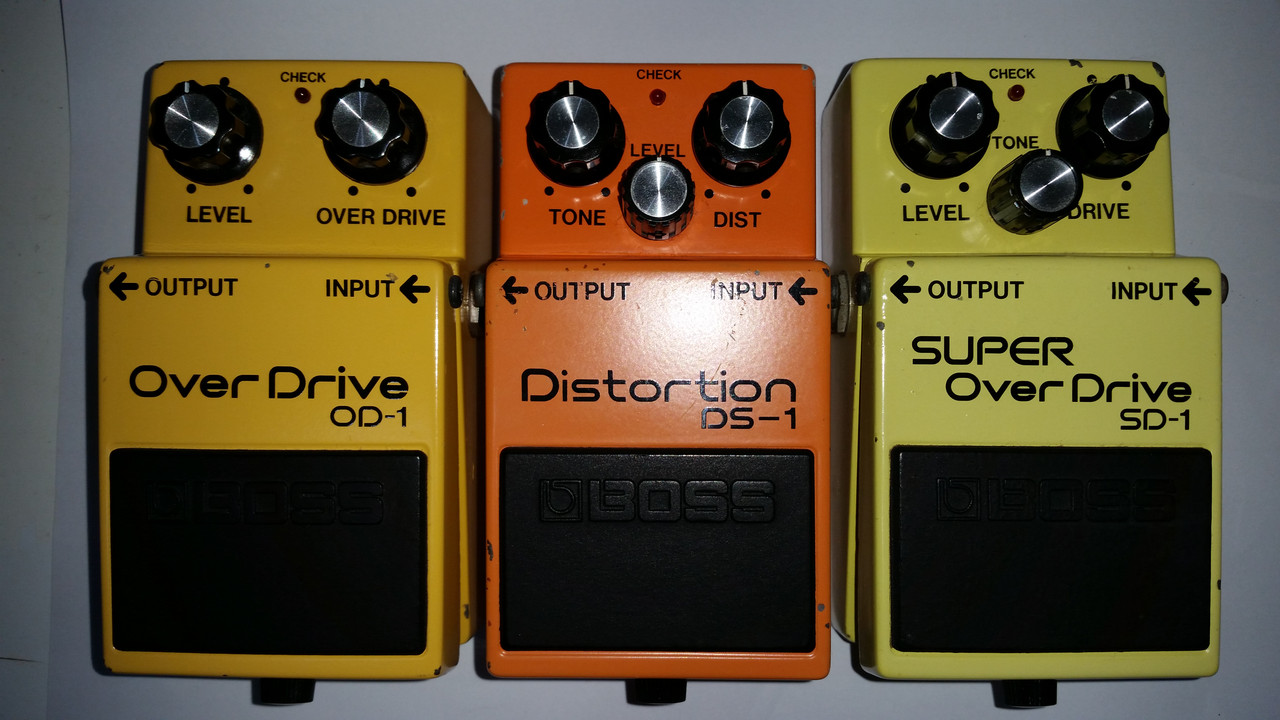
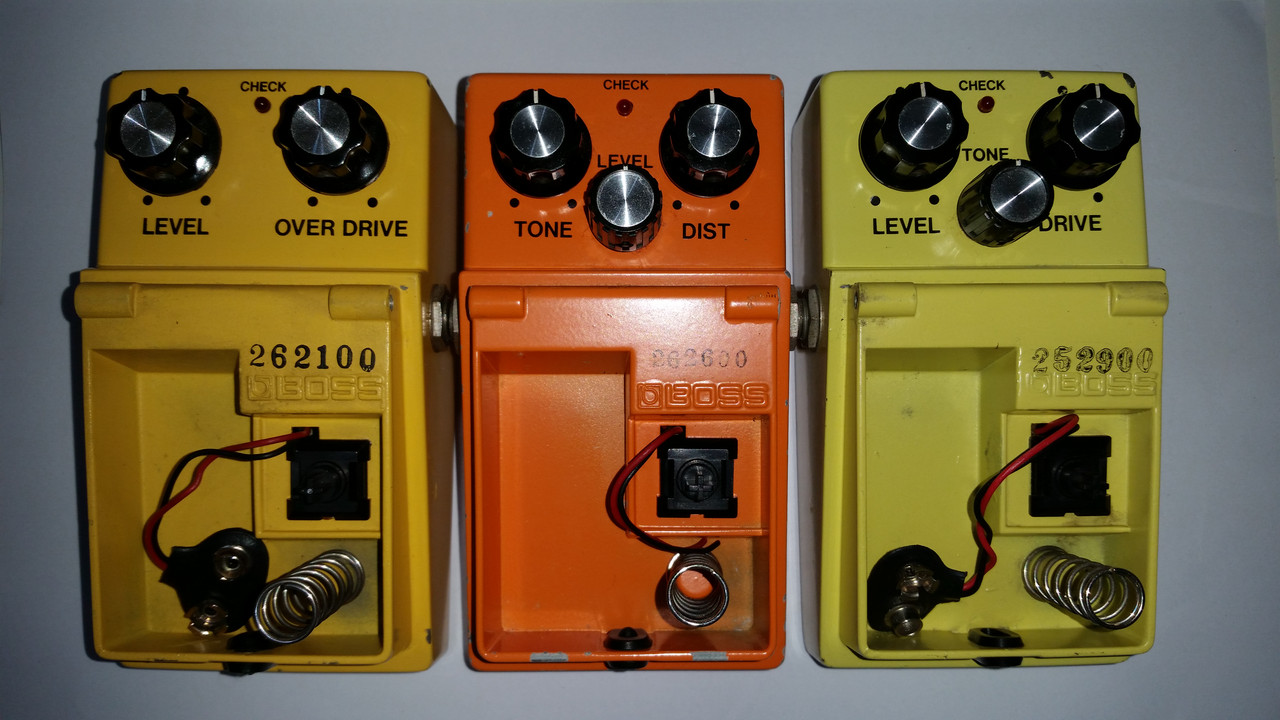
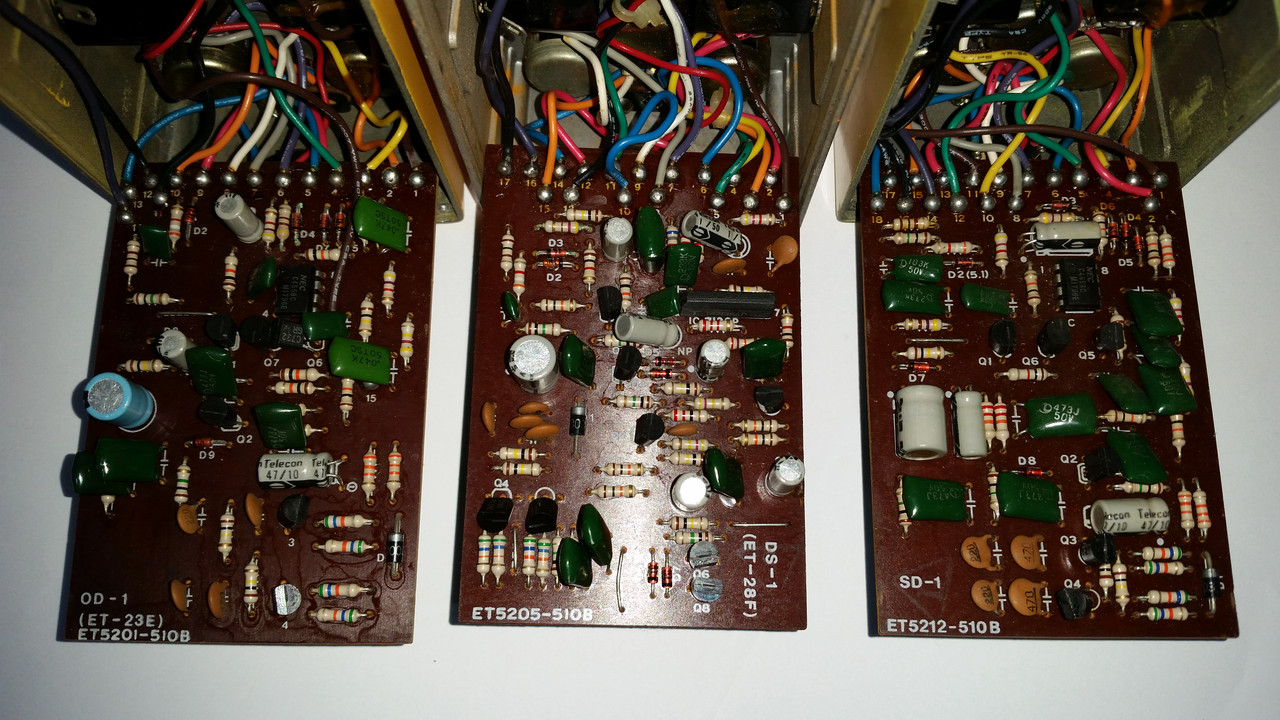
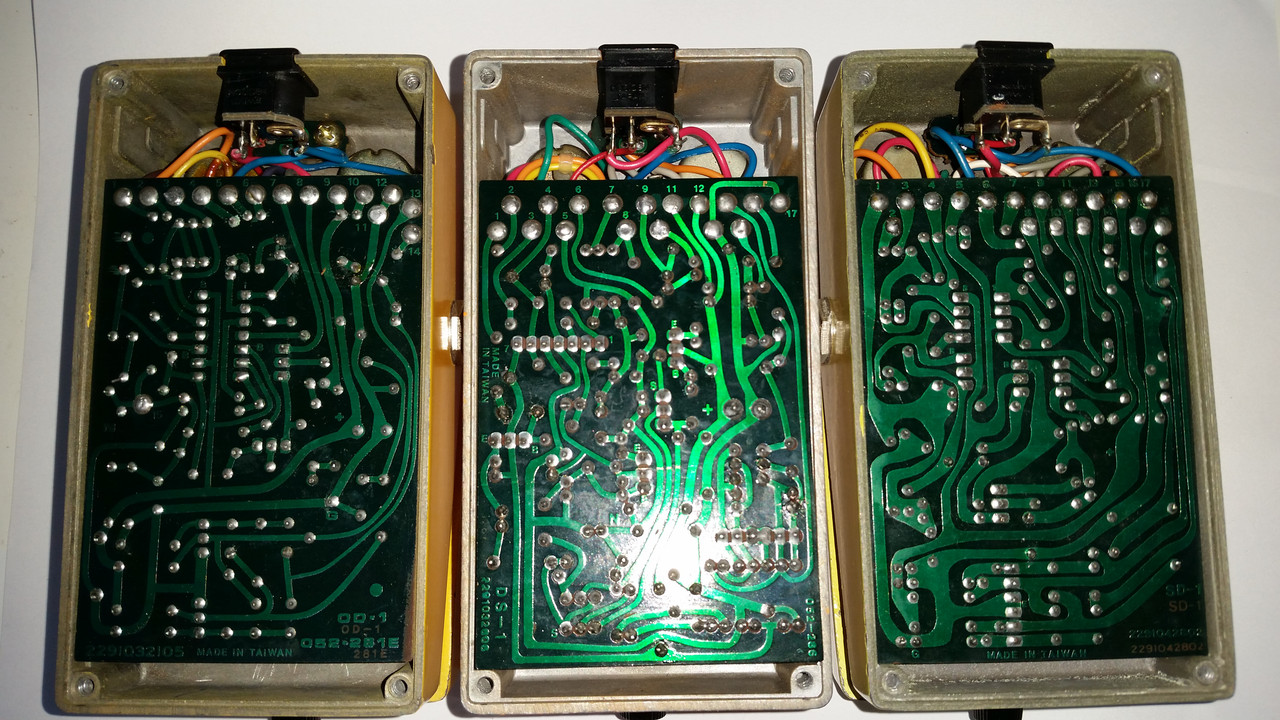
kinetic wrote: ↑Wed Nov 09, 2022 11:17 am
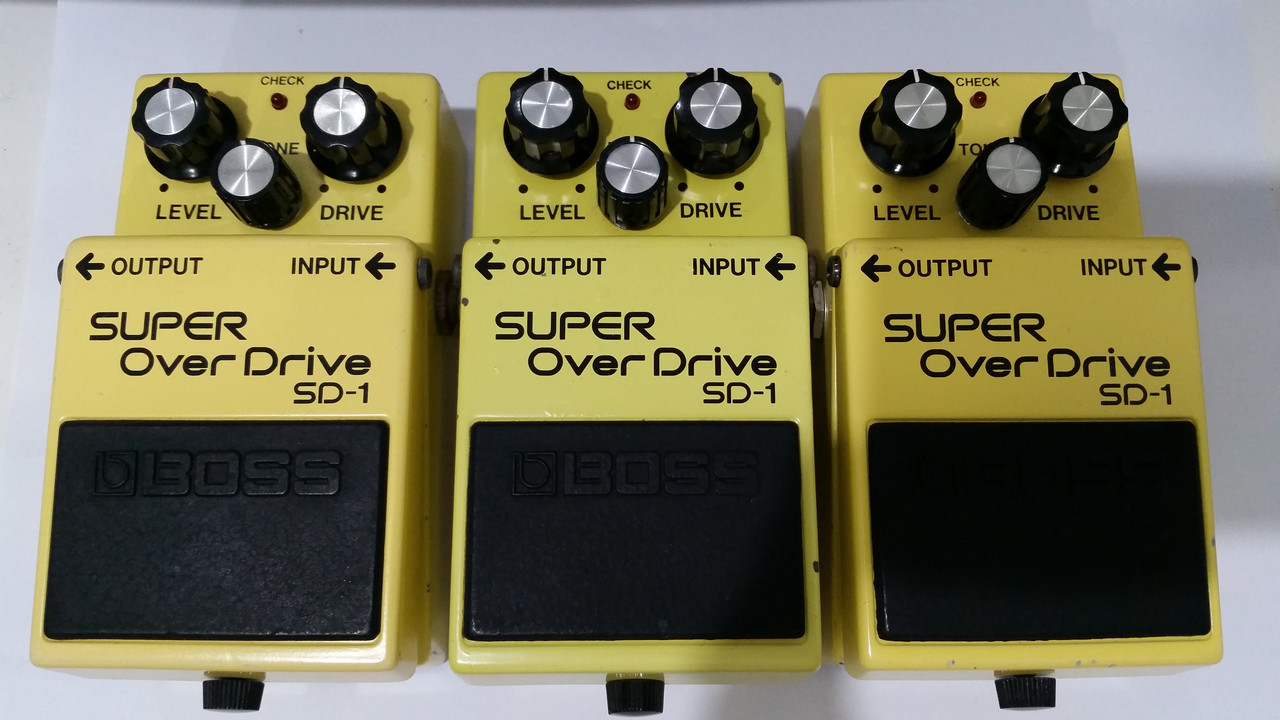
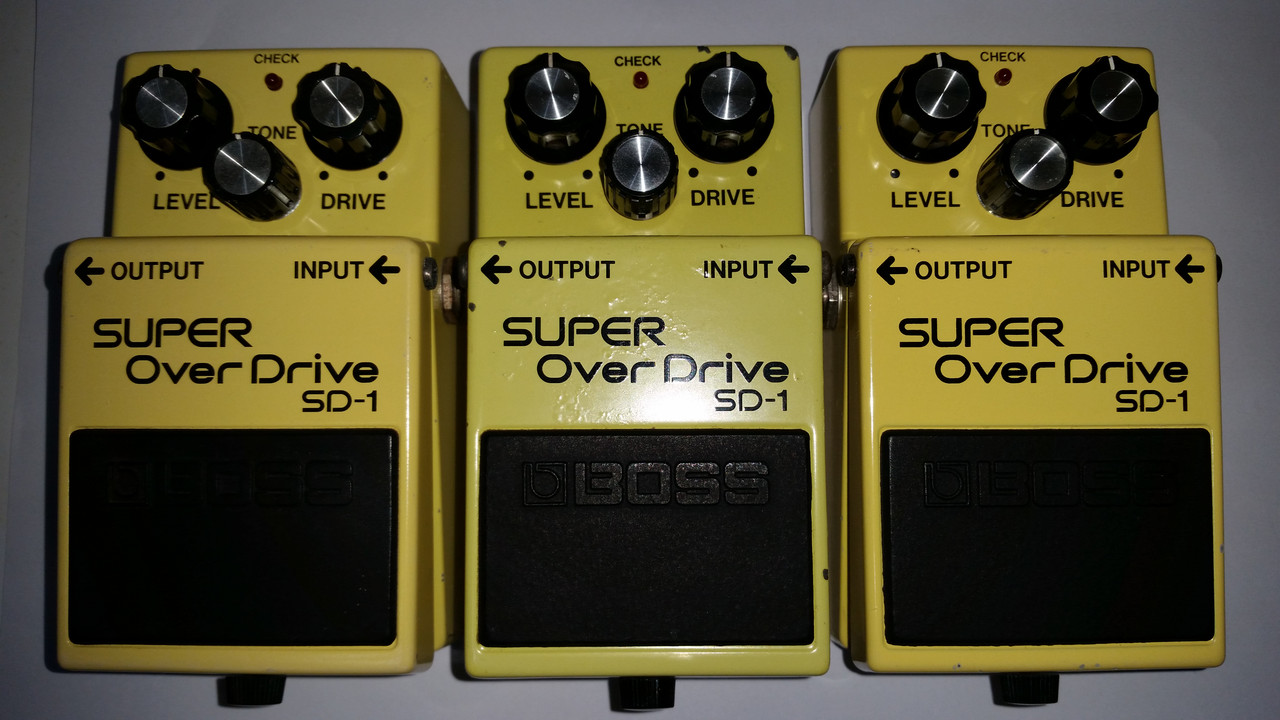
I think the theory that the PCB's were made in Taiwan but the rest of the pedal assembled in Japan is a sound theory. It could either mean the whole PCB (assembled with components) or just the PCB itself was outsourced.
It was probably a complete pcb, with components already soldered because the capacitors brands are different from the ones Boss used at that time.
kinetic wrote: ↑Wed Nov 09, 2022 11:17 am
Perhaps what we have here is an artefact of the beginnings of Roland/Boss's business relationship with Taiwan. By testing a part of the imported product on a small subset of their worldwide market (Japan, where all of these pedals seem to originate from retail wise), they were able to validate their process and quality. It's also interesting that recently more are surfacing.
This makes sense.
kinetic wrote: ↑Wed Nov 09, 2022 11:17 am
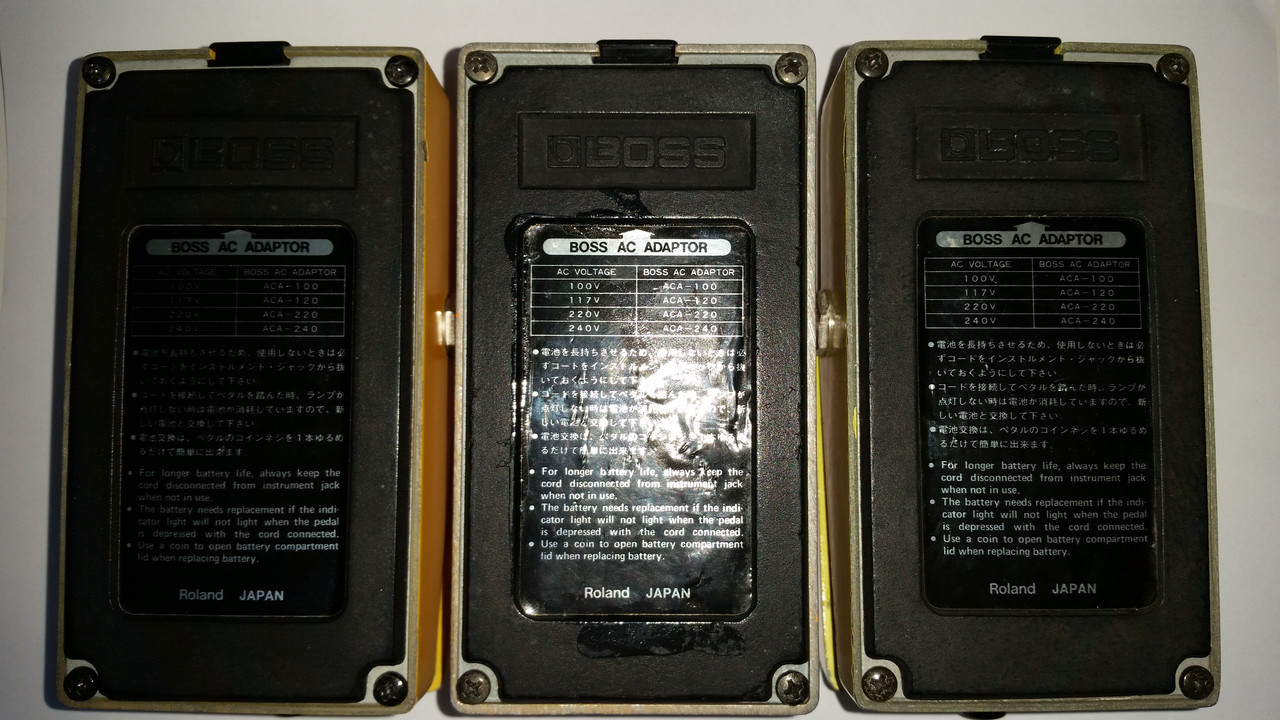
I think it's also possible that the entire pedal was Made in Taiwan. The back label doesn't explicitly say "Made in Japan" but refers to just Roland Japan.
Since Boss had a production line in Japan, I don't think the entire pedal was made in Taiwan, but maybe they were assembled in Taiwan, with Boss sending
those part surplus to Taiwan where they made the pcb and assembled the pedal, sending them back to Japan to be put in the market. It's possible.
That black label was used in other regular models with a sticker saying Made in Japan covering the text Roland Japan.
kinetic wrote: ↑Wed Nov 09, 2022 11:17 am
I know a lot of people would say calling it MIT would be less desirable but I think in this case it makes the pedal far more interesting.
Well, since what makes the "sound" are the components in the pcb, you may say it is, "sound wise", a made in Taiwan pedal. And yes, makes it interesting because they are unique, a very early "made in Taiwan" pedal.

 :
: